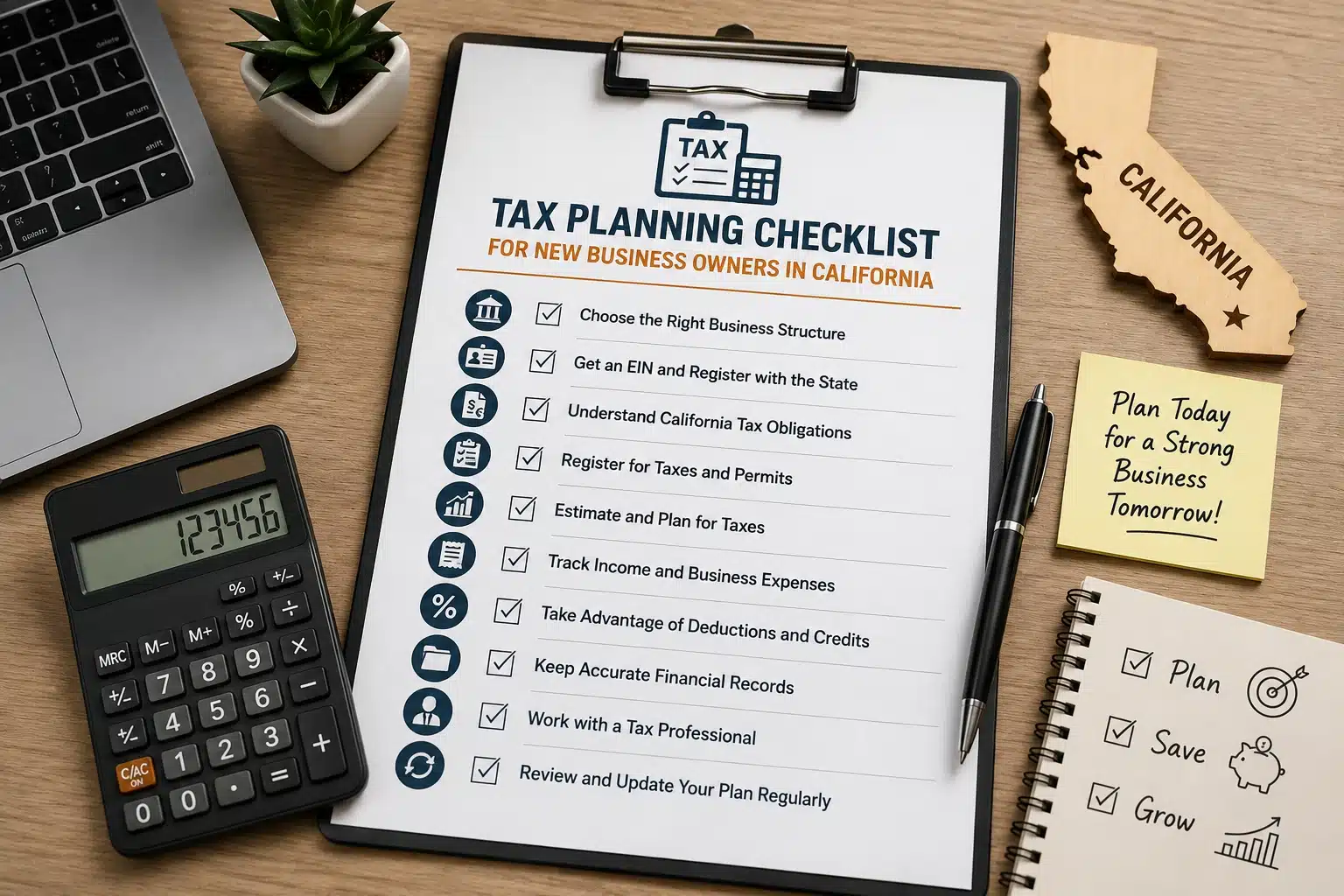
Tax Planning Checklist for New Business Owners in California
Starting a business in California can be exciting. However, tax notices, filing deadlines, payroll requirements, and other compliance responsibilities can quickly become part of running the business. Many new owners focus their energy on sales, branding, hiring, and expansion while delaying tax planning. That decision can create significant financial problems later.
California has a complex business tax environment. Missed tax filings, poor recordkeeping, payroll mistakes, and overlooked deductions can quickly create additional challenges. These issues may lead to penalties, compliance problems, and unnecessary tax costs that could have been avoided with proper planning.
Good tax planning goes beyond just getting returns in on schedule. It focuses more on consistent cash flow, compliance, organized finances, and tax savings.
A solid tax-planning checklist helps California companies stay prepared, organized, and financially secure as they grow through every phase.
What Is Tax Planning for Businesses?
Tax planning for businesses means arranging financial matters in a smart way to reduce unnecessary tax costs while fully complying with all federal, California, and local tax rules.
Business tax planning includes:
Importance of Tax Planning for New Business Owners in California
Helps Reduce Unnecessary Tax Liabilities
Smart tax planning allows businesses to identify potential tax deductions, properly organize business operations, and reduce unnecessary taxes before they accrue.
Improves Cash Flow Management
Businesses that do their tax planning properly can prepare for quarterly taxes, payroll charges, and everyday expenses that may arise, helping them avoid sudden cash flow problems when tax deadlines approach.
Prevents Expensive Penalties and Compliance Issues
Penalties, interest, and official notices from tax agencies can be issued due to late filings, unpaid taxes, payroll errors, and poor recordkeeping.
Supports Better Financial Organization
As California businesses grow, they can see the benefits of solid tax planning, as it helps improve their bookkeeping, financial reporting, expense tracking, and overall understanding of operations.
Tax Planning Checklist for New Business Owners in California
Throughout the year, new businesses in California handle numerous financial and compliance tasks. A clear checklist reduces tax risks, improves organization, and maintains better financial control as the company scales.
Choose the Correct Business Structure
The selected entity affects taxes, liabilities, payroll obligations, and the future use of funds. Even in California’s challenging tax environment, owners should review LLCs, S corporations, sole proprietorships, partnerships, and C corporations before registering, as the wrong choice can be detrimental to their tax situation over time.
Register With California Tax Agencies Properly
Businesses may need to register with the California Department of Tax and Fee Administration, Employment Development Department, and Franchise Tax Board, depending on the type of business.
Failure to follow these steps may lead to compliance problems, late filings, payroll issues, sales tax problems, and unexpected penalties for a new business that may employ workers or conduct taxable activities.
Apply for an Employer Identification Number (EIN)
An EIN will help ensure that personal and company funds remain distinct and make establishing and managing payroll, hiring employees, filing tax forms, banking, and reporting much simpler.
Having an EIN makes recordkeeping more accurate and tax handling simpler for companies that plan to grow, expand operations, or hire employees in California.
Open Separate Business Bank Accounts
Blending personal and business funds leads to messy accounting, missed deductions, compliance risks, and audit issues later on.
Companies should use separate checking and savings accounts, business credit cards, and accounting tools to improve money management, maintain accurate records, gain daily financial visibility, and make tax preparation much easier.
Set Up Organized Bookkeeping Systems
Weak bookkeeping leads to some of the worst financial problems for small companies. Businesses should be careful when tracking revenue, payroll, operating expenses, vendor payments, receipts, invoices, and purchases.
Clear financial statements create more opportunities to identify deductions, reduce filing errors, simplify reporting, and provide greater assurance during audits and reviews.
Prepare for Quarterly Estimated Tax Payments
In California, many businesses do not pay estimated taxes for the entire year at once but instead pay them in installments throughout the year.
Missing these payments can result in interest, penalties, cash flow problems, and additional stress. Businesses need to carefully calculate their estimates to ensure that funds remain available throughout the year and that tax payments do not come as a surprise at tax time.
Track Every Tax-Deductible Business Expense
One of the issues that often arises is that companies pay more taxes than they should because they do not maintain accurate records of what they can deduct.
Common deductions include office expenses, marketing and advertising expenses, software expenses, insurance, professional assistance, equipment purchases, internet costs, travel expenses, and other business expenses. Clear records are key to supporting deductions and handling audits.
Understand California Payroll Tax Responsibilities
When you hire employees, you have to deal with various payroll tax requirements, including federal withholding, California payroll taxes, unemployment taxes, employee reporting, and compliance requirements.
Payroll errors can lead to penalties and ongoing problems. Companies should establish reliable payroll systems early to remain compliant and maintain accurate employee reporting.
Register for Sales Tax if Required
Seller’s permits and sales tax returns may be required if the company sells taxable goods or services. Failure to collect, report, or remit sales taxes can result in significant penalties and compliance issues.
Companies can reduce risks and reporting problems later by first understanding the state’s sales tax regulations.
Maintain Compliance With California Franchise Tax Rules
Many LLCs and corporations in California pay annual franchise taxes even if they make no profit. Missing these payments can result in penalties, operational suspensions, and business restrictions. Companies should monitor franchise tax due dates closely and remain compliant with state filing requirements year-round.
Organize Financial Documents and Tax Records
Companies should keep clear copies of payroll reports, receipts, tax returns, bank statements, vendor invoices, contracts, and financial statements ready throughout the year. Strong records protect the business during audits, improve reporting quality, simplify tax preparation, and support financial decision-making as the company grows in California.
Plan Ahead for Year-End Tax Strategies
Leaving everything until tax season reduces opportunities to save money. Companies should review performance early to assess retirement contributions, equipment purchases, income timing, available deductions, and tax credits before the year ends. Planning ahead lowers tax costs and gives owners more flexibility for future decisions.
Important Tax Deadlines California Businesses Should Track
California companies need to watch several filing dates throughout the year. Missing key dates often leads to penalties, interest, official notices, and business interruptions that hurt cash flow and future financial planning for growing companies.
Quarterly Estimated Tax Deadlines
Businesses that must make estimated payments usually make them throughout the year. Missing these dates often results in penalties, interest, and sudden financial pressure as the company grows.
California Franchise Tax Deadline
Many California LLCs and corporations pay annual franchise taxes regardless of their profit level. Companies should monitor these dates to avoid penalties, suspensions, and issues with the California Franchise Tax Board.
Payroll Tax Filing Deadlines
Companies with staff file payroll taxes according to set schedules. Missing these dates can lead to significant penalties, employee reporting problems, and compliance issues.
Sales Tax Filing Deadlines
Companies with sales tax registration file and pay collected taxes monthly, quarterly, or annually, depending on their filing requirements. Missing deadlines can create costly compliance issues and state penalties.
Federal and State Income Tax Return Deadlines
Companies prepare and file complete federal and California tax returns each year accurately and on time. Late returns can lead to penalties, delays, and additional financial pressure during key planning periods.
Common Tax Mistakes New California Business Owners Make
Mixing Personal and Business Finances
Combining personal and business transactions creates recordkeeping confusion, missed deductions, incorrect reports, and a higher audit risk when taxes are due.
Missing Quarterly Tax Payments
Many companies underestimate quarterly taxes early on, which leads to penalties, interest, and cash flow problems later.
Poor Expense Tracking
Lost receipts and incomplete records can reduce valid deductions and lead to errors during tax filing.
Choosing the Wrong Business Structure
Choosing the wrong entity type can unnecessarily increase tax costs and create ongoing operational and financial drawbacks for future growth.
Ignoring California Compliance Requirements
One common and critical mistake is failing to comply with California requirements, including overlooking payroll rules, franchise taxes, or sales tax obligations. This can quickly lead to expensive compliance problems.
Conclusion
Many California business owners do not realize how serious tax issues can become until penalties, official notices, payroll problems, or unexpected costs start to hurt daily operations. Weak records, missed deadlines, incorrect filings, and poor tax planning quietly undermine cash flow, profits, and future stability when the company needs them most. That is why solid tax planning should start right away.
Looking for a reliable tax consulting firm to help with tax planning? Kaya Tax & Bookkeeping Services, Inc. is among the leading tax and business consulting firms helping California business owners handle complex tax planning through expert tax planning, bookkeeping, payroll support, tax preparation, and compliance services designed for growing companies.
Our team supports entrepreneurs in reducing unnecessary costs, avoiding costly mistakes, better organizing finances, and keeping operations steady year-round. Contact us today to stay compliant with applicable tax requirements and focus on your business growth.
Frequently Asked Questions About Tax Planning for New Business Owners in California
1. When should a new business owner in California start tax planning?
Tax planning should begin as early as possible, ideally when setting up the business. Early planning can help owners choose an appropriate business structure, organize financial records, prepare for tax payments, and understand applicable California compliance requirements.
2. Why is choosing the right business structure important for taxes?
A business structure can affect taxes, liability, payroll obligations, and how business funds are managed. New owners should carefully consider options such as a sole proprietorship, LLC, partnership, S corporation, or C corporation before deciding which structure best fits their situation.
3. Does a new California business need an EIN?
Many businesses use an Employer Identification Number (EIN) for tax reporting, payroll, banking, and employee-related responsibilities. An EIN can also make it easier to keep business and personal financial activities separate.
4. Why should business and personal finances be kept separate?
Keeping separate business bank accounts and financial records makes bookkeeping more organized, simplifies tax preparation, helps track deductible expenses, and reduces confusion when reviewing business transactions.
5. Do new business owners in California need to make estimated tax payments?
Some business owners may be required to make estimated tax payments during the year. Planning for these payments can help prevent unexpected tax obligations, interest, penalties, and cash flow problems.
6. What business expenses should new owners track for tax purposes?
Businesses should maintain accurate records of expenses such as office costs, advertising, software, insurance, professional services, equipment, internet expenses, travel, and other qualifying business costs. Good documentation helps support deductions during tax preparation.
7. What tax responsibilities arise when a California business hires employees?
Hiring employees can create payroll-related responsibilities, including federal withholding, California payroll taxes, unemployment taxes, employee reporting, and other compliance requirements. Establishing an organized payroll system early can help reduce reporting errors.
8. Does every California business need to register for sales tax?
Not every business has the same sales tax responsibilities. Businesses that sell taxable goods or services may need appropriate registration, permits, and sales tax reporting depending on their activities.
9. Why is bookkeeping important for tax planning?
Accurate bookkeeping helps business owners track revenue, expenses, payroll, payments, invoices, and purchases throughout the year. Organized financial records make tax preparation easier and help businesses monitor their overall financial position.
10. What tax mistakes should new California business owners avoid?
Common mistakes include mixing personal and business finances, missing estimated tax payments, failing to track expenses, choosing an unsuitable business structure, and overlooking California tax and compliance requirements.