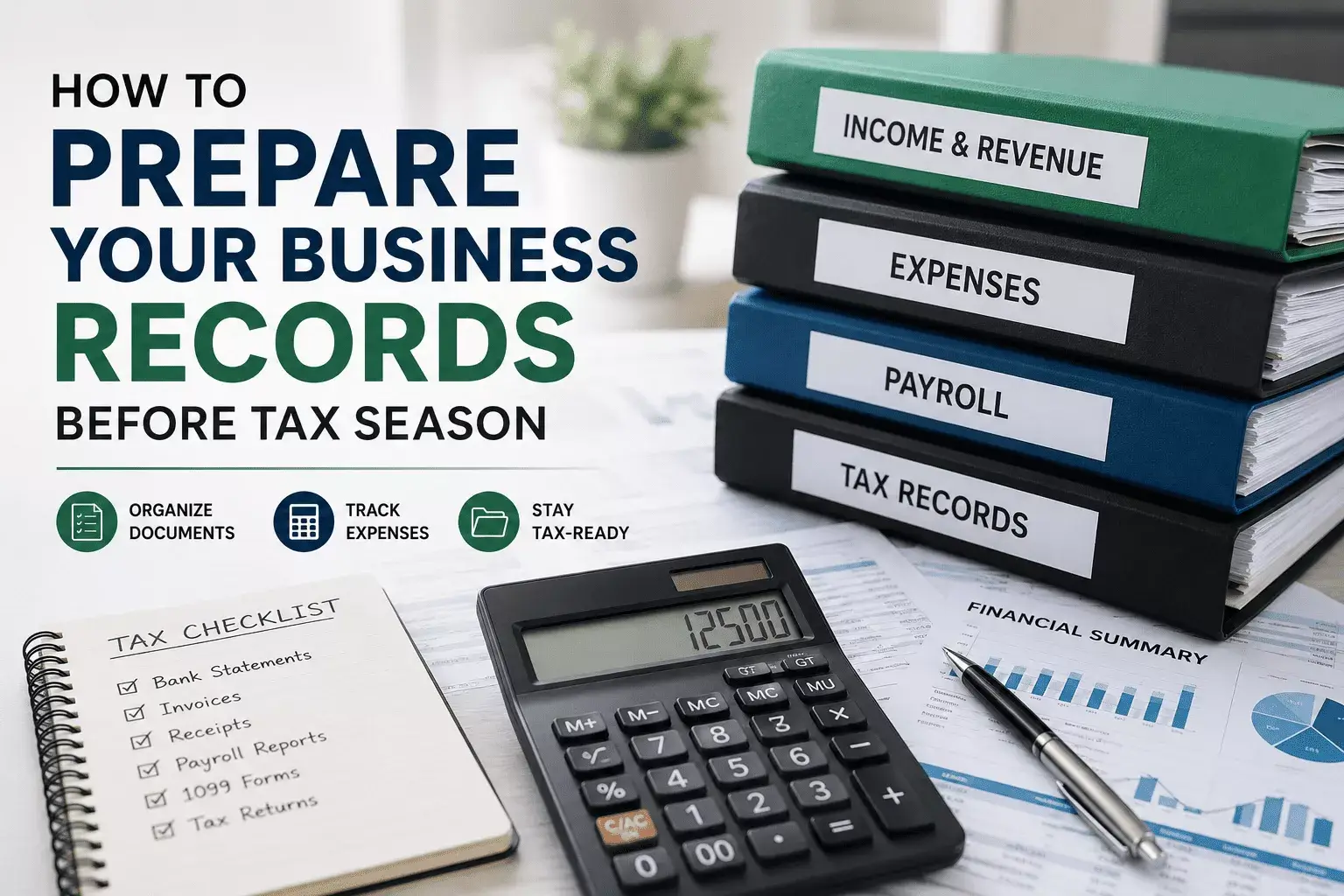
Tax season gets stressful quickly when your business records remain disorganized throughout the year. Many owners wait until the last minute to review their books, pay stubs, receipts, contractor payments, and tax documents. That can result in late submissions, incorrect reporting, missed deductions, and additional financial stress.
Improper recordkeeping does far more than slow down tax preparation. It can increase the risk of IRS penalties, inaccurate financial figures, payroll violations, cash flow confusion, and future audit issues. To avoid these problems, it is important to keep all paperwork organized, as mistakes can result in costly errors at tax time.
Getting your business records in order ahead of tax season keeps everything compliant, financially organized, and ready for daily operations. Good recordkeeping makes tax filing easier, helps identify available deductions, reduces reporting errors, and provides clearer financial visibility throughout the year.
Companies that maintain solid records usually experience easier filings, fewer compliance risks, and stronger financial oversight in the long run.
What Are Business Records for Tax Season?
Business records for tax season include every financial document that tracks income, expenses, payroll activity, tax obligations, deductions, and daily transactions throughout the year. These documents help companies prepare accurate federal and state tax returns, comply with IRS requirements, and maintain accurate financial reports.
Business records may include:
Types of Business Records to Organize Before Tax Season
Businesses must carefully organize their financial records before filing their tax returns. Missing or incomplete documents often lead to inaccurate reporting, deduction issues, and compliance problems during tax preparation.
Income and Revenue Records
Companies should maintain clear records of invoices, customer payments, deposits, sales reports, merchant statements, and revenue-tracking documents throughout the business year.
Payroll and Employee Records
Payroll reports, W-2s, withholding records, payroll tax returns, employee benefit records, and compensation details remain crucial for complying with federal and state reporting requirements.
Contractor and 1099 Records
Businesses that work with contractors should organize contractor invoices, payments, W-9s, and 1099-NEC forms before the filing deadline.
Expense and Deduction Documentation
Expense receipts, daily purchases, insurance costs, software payments, office expenses, travel expenses, and marketing costs should be properly categorized for accurate deduction tracking.
Bank and Credit Card Statements
Companies should properly maintain complete business bank records and credit card statements to support account reconciliation, expense verification, and accurate financial reporting during tax season.
Sales Tax Records
Companies that collect sales tax should organize sales tax returns, collected tax reports, proof of payment, and related compliance documents before preparing their annual tax records.
Previous Tax Returns
Previous federal, state, payroll, and sales tax returns allow companies to compare financial information, review past deductions, and prepare more accurate financial reports for the current tax year.
Financial Statements and Reports
Profit and loss statements, balance sheets, and cash flow reports enable companies to assess their financial performance before completing their tax returns.
Importance of Organizing Business Records Before Tax Season
Clean financial records help companies reduce filing pressure, improve reporting accuracy, and maintain better compliance when preparing taxes. Good recordkeeping also improves financial visibility and supports future planning for growing companies.
Improves Tax Filing Accuracy
Clear financial records reduce reporting errors, duplicate entries, missing information, and incorrect calculations during federal and state tax preparation.
Helps Identify Legitimate Tax Deductions
Well-organized expense records help companies properly identify deductible expenses and reduce unnecessary tax liabilities when preparing year-end returns.
Reduces IRS Audit Risks
Well-organized documentation provides clear financial details and stronger support if audits, tax reviews, or investigations are conducted by federal or state agencies.
Saves Time During Tax Preparation
Companies with organized bookkeeping avoid last-minute searches for documents, lost files, late filings, and workflow disruptions before important tax deadlines each year.
Improves Overall Financial Visibility
Clean records help companies better understand their profits, payroll obligations, cash flow, operating costs, and overall financial health throughout the year.
Best Practices to Prepare Your Business Records Before Tax Season
Preparing records before tax season can help reduce the risk of errors, improve filing accuracy, and limit additional financial pressure later. Companies should review their financial records regularly throughout the year rather than waiting until filing deadlines approach.
Bank & Credit Card Reconciliation
Companies should reconcile their accounting records with business bank statements and credit card activity regularly. This helps identify duplicate entries, missing expenses, incorrect transactions, and reporting gaps before filing official federal or state tax returns.
Organize and Categorize Deductible Expenses Properly
Companies should categorize deductible expenses into areas such as payroll, marketing, office supplies, travel, software, insurance, equipment purchases, and operations. Proper categorization helps track deductions, improve reporting, keep financial records organized, and support compliance reviews during IRS examinations or annual tax preparation.
Carefully Review Payroll Records and Tax Filings
Payroll errors can create significant tax problems during tax season. Businesses should review worker classifications, withholding records, payroll tax returns, W-2s, payroll deposits, and reporting accuracy before completing annual federal and state tax returns.
Maintain Updated Contractor and 1099 Documentation
Companies that pay independent contractors should organize W-9 forms, contractor invoices, payment records, and 1099-NEC documentation before filing deadlines. Missing contractor records can lead to IRS reporting issues, penalties, and late filings for companies that work with multiple contractors.
Categorize Personal and Business Transactions
Mixing personal and business finances creates bookkeeping confusion and inaccurate reporting at tax time. Companies should use separate bank accounts, business credit cards, bookkeeping tools, and business expense records to improve financial clarity, deduction tracking, reporting accuracy, and year-round compliance.
Review Previous Tax Returns Before Filing
Previous federal and state tax returns help companies compare deductions, identify reporting differences, confirm consistent information, and prepare accurate returns for the current year. Reviewing past tax records can also help identify missing documents that need to be corrected before official forms are submitted to tax agencies.
Back Up Digital Financial Records Securely
Companies should regularly maintain secure electronic copies of receipts, invoices, payroll records, accounting records, financial statements, and tax returns. Cloud storage and secure backups help protect important financial information from accidental loss, cybersecurity risks, operational disruptions, and unexpected technical problems during tax season.
Work With Tax Professionals Before Deadlines Arrive
Companies that organize their records early with professional tax support often experience fewer filing errors and compliance issues. Tax professionals can review bookkeeping accuracy, identify deduction opportunities, organize documents properly, and reduce additional financial pressure before federal and state deadlines create last-minute stress.
Common Recordkeeping Mistakes Businesses Make
Poor recordkeeping leads to late filings, deduction issues, compliance risks, and additional financial pressure at tax time. Many companies continue making the same basic bookkeeping mistakes throughout the year without realizing how they affect reporting accuracy and overall financial stability.
Missing Expense Receipts and Documentation
Companies frequently lose receipts or fail to organize expense records, which can reduce deduction opportunities and significantly increase reporting errors during tax preparation.
Ignoring Payroll Reporting Errors
Payroll errors involving worker classifications, withholding, or payroll tax returns can result in penalties, compliance notices, and reporting problems during tax season.
Waiting Until Deadlines Approach
Last-minute record preparation creates additional pressure, rushed filings, incomplete documentation, and avoidable financial errors before federal and state tax deadlines.
Failing to Reconcile Financial Records
Bank accounts and accounting records that are never reconciled may contain duplicate entries, missing transactions, and inaccurate reports, reducing the reliability of tax filings.
Conclusion
Many companies create costly tax problems well before filing deadlines. Disorganized bookkeeping, missing receipts, payroll errors, incomplete contractor records, and inaccurate financial reports gradually increase the risk of penalties, reporting errors, and additional tax costs throughout the year.
Waiting until tax season begins only adds more financial pressure and operational confusion. This is why organized financial preparation matters before tax deadlines approach.
Kaya Tax & Bookkeeping Services, Inc helps companies sort their bookkeeping, prepare tax paperwork, handle payroll reports, stay compliant with regulations, and make year-end tax work easier through expert financial support tailored for growing companies.
Our skilled team helps owners reduce filing pressure, improve report quality, avoid costly financial errors, and create better bookkeeping setups that support consistent business growth. As a tax and accounting consulting firm, we work closely with companies to keep business records organized, compliant with regulations, and fully prepared before tax season to avoid costly penalties.