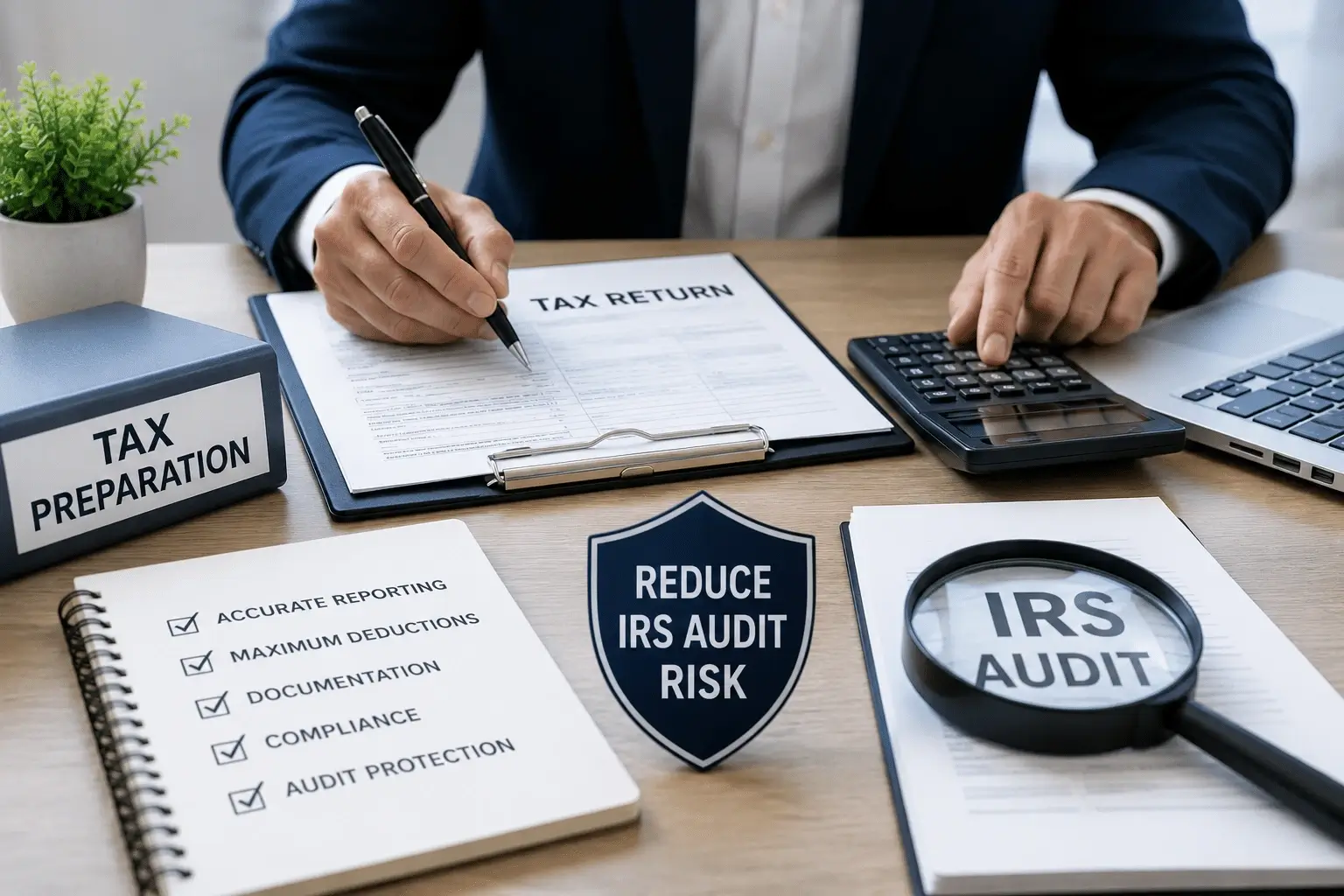
Many Americans are concerned about being audited by the IRS, regardless of whether they are employers, freelancers, or employees. Some errors, such as incorrect deductions, unreported income, poor bookkeeping, or missing documentation, can increase the chances that a return will be selected for review by the IRS. These situations often happen unintentionally because people rush their tax preparation, fail to maintain records, use incorrect tax categories, or simply do not fully understand the applicable tax rules.
Not all IRS audits result from intentional misconduct or serious errors. Audits may begin because of unusual patterns in returns, numbers that do not match, unusually large deductions, or other information that stands out in the IRS’s computer systems.
Professional tax preparation can help reduce risk by improving filing accuracy, organizing financial records, identifying missing information, and preparing returns in accordance with current IRS requirements.
By providing support and guidance, tax professionals can help individuals navigate the tax process with greater ease and confidence, reduce the stress associated with tax matters, and improve the accuracy and reliability of their financial reporting.
What Is an IRS Audit?
An IRS audit is a review of tax return information and supporting documentation by the Internal Revenue Service to determine whether the information reported is accurate and properly supported.
IRS audits may involve reviewing:
Income reporting
Business expenses
Tax deductions
Payroll records
Investment income
Self-employment income
Financial documentation
Audits may be conducted by mail, at an IRS office, or in person, depending on the complexity of the tax situation.
Common Reasons Tax Returns Get Audited
IRS computer systems and data-matching processes are used to help identify returns with unusual patterns, discrepancies, or potential compliance issues.
Unreported or Underreported Income
Differences between what taxpayers report on their returns and what the IRS receives from employers, financial institutions, or other sources can trigger reviews or notices.
Excessive Business Deductions
Business deductions that appear unusually high compared with reported income or that do not appear to meet IRS requirements may draw additional scrutiny, particularly for businesses and self-employed individuals.
Poor Bookkeeping and Missing Documentation
Incomplete financial records and deductions without supporting documentation can raise concerns when the IRS reviews a tax return more closely.
Incorrect Business Expense Classifications
Incorrectly categorizing expenses or mixing personal spending with business expenses can lead to inaccurate reporting.
Frequent Filing Errors
Simple math errors, missing forms, incorrect Social Security numbers, or incomplete tax returns can create compliance issues and may attract additional IRS attention.
How Professional Tax Preparation Helps Reduce IRS Audit Risk
Professional tax preparation services can make it easier to file tax returns accurately, maintain organized records, and reduce mistakes that may attract IRS attention.
Improves Tax Filing Accuracy
A professional tax preparer reviews financial information, including income, deductions, and supporting documents, before the return is submitted to the IRS. This can help reduce calculation errors, incorrect figures, missing information, and reporting discrepancies that may trigger IRS systems and increase the likelihood of additional review.
Ensures Proper Deduction Reporting
Many taxpayers may overestimate deductions or claim expenses that do not meet applicable requirements. Professional tax preparation can help ensure deductions are properly supported, comply with tax rules, and are reported according to current IRS guidelines, reducing unnecessary compliance risks.
Common deductions reviewed carefully include:
Home office expenses
Vehicle deductions
Business meals
Travel expenses
Equipment purchases
Self-employment expenses
Strengthens Financial Record Organization
Proper bookkeeping is one of the strongest ways to prepare for an IRS review or audit. Professional tax preparation can help ensure documents are complete, identify missing records, and improve bookkeeping before the return is submitted. This can reduce documentation and reporting problems that may create compliance issues later.
Important records often reviewed include:
Bank statements
Payroll reports
Receipts and invoices
Mileage logs
Expense documentation
Prior tax filings
Helps Maintain IRS Compliance
Tax laws and IRS requirements can change over time, especially for businesses, freelancers, and self-employed individuals. Professional preparers stay informed about these changes and can help clients avoid incorrect methods, outdated practices, and reporting mistakes that may increase audit risk.
Identifies Potential Audit Triggers Early
Tax professionals can identify unusual transactions, excessive deductions, inconsistent income reporting, or insufficient documentation before a return is filed. This early review gives taxpayers an opportunity to correct potential issues before submission, helping reduce the risk of IRS notices, penalties, and additional scrutiny.
Supports Accurate Self-Employment Tax Reporting
Freelancers, consultants, counselors, and contractors may face greater reporting complexity because of the rules surrounding self-employment income and deductions. Professional preparation can help ensure quarterly payments, self-employment income, contractor payments, and business expenses are reported accurately, reducing costly mistakes and improving compliance.
Improves Payroll Tax Compliance
Payroll tax errors can result in IRS notices and penalties for businesses. Professional tax support can help ensure payroll records are properly maintained, workers are classified correctly, deposits are made accurately, and reporting requirements are handled correctly, reducing the risk of underreporting or underpayment.
Provides Better Audit Readiness
Even when an audit occurs, professionally prepared tax records can make the process easier to manage. Clean, organized, and well-supported documentation can help taxpayers respond to IRS questions more efficiently and with less confusion, stress, and additional expense.
Common Taxpayer Mistakes That Increase Audit Risk
Many taxpayers increase their audit risk through poor habits, last-minute preparation, or a lack of understanding of tax requirements.
Mixing Personal and Business Expenses
Combining personal and business purchases can lead to incorrect deductions and reporting problems.
Claiming Unrealistic Deductions
Deductions that appear unusually high compared with reported income may attract additional IRS scrutiny.
Failing to Report All Income
Missing 1099 income, freelance income, or investment income can result in IRS mismatch notices when third-party information does not match the filed return.
Poor Recordkeeping Habits
Disorganized records make it difficult to support deductions and respond effectively to IRS questions.
Filing Late or Incorrect Returns
Repeated late filings and inaccurate returns can create ongoing compliance problems over time.
Benefits of Working With Professional Tax Preparers
Professional tax preparation provides more than simply completing forms for individuals and businesses with complex financial situations.
Reduces Filing Errors
Professional review improves reporting accuracy and helps reduce costly mistakes and discrepancies.
Improves Long-Term Tax Planning
Tax professionals can provide guidance on estimated payments, deductions, retirement planning, and future financial obligations.
Saves Valuable Time
Outsourcing tax preparation reduces the workload and allows individuals and business owners to focus more on their daily responsibilities and growth.
Provides Better Financial Confidence
Accurate returns and organized records can provide greater confidence and peace of mind during tax season.
Who Should Consider Professional Tax Preparation?
Professional tax assistance can be especially useful for people with complex financial situations or more detailed tax returns.
Self-Employed Professionals and Freelancers
Self-employed individuals often need to carefully track deductions and quarterly tax payments, making professional tax preparation especially valuable.
Small Business Owners
Businesses dealing with payroll, deductions, inventory, and operating expenses can benefit from professional organization and compliance support.
Individuals With Multiple Income Sources
People with investment income, freelance income, or rental income may require more detailed reporting assistance.
Taxpayers With Prior IRS Notices
Anyone who has experienced previous filing issues, penalties, or IRS notices may benefit from stronger professional review and tax planning.
Conclusion
IRS audits can create significant stress because many taxpayers only realize later that inaccurate filings, poor bookkeeping, unsupported deductions, or reporting gaps increased their risk. Even small mistakes can result in penalties, notices, delayed refunds, and additional complications.
Professional tax preparers can help reduce these risks, improve accuracy, simplify the filing process, strengthen compliance, and identify potential problems before returns are submitted.
Whether you are an individual, freelancer, or business owner, Kaya Tax & Bookkeeping Services can help reduce audit-related risks and improve tax return accuracy through customized bookkeeping, tax filing support, financial organization, and compliance assistance.
Our experienced tax team helps clients improve recordkeeping, reporting accuracy, deduction management, and long-term financial confidence by providing support with complex tax responsibilities.