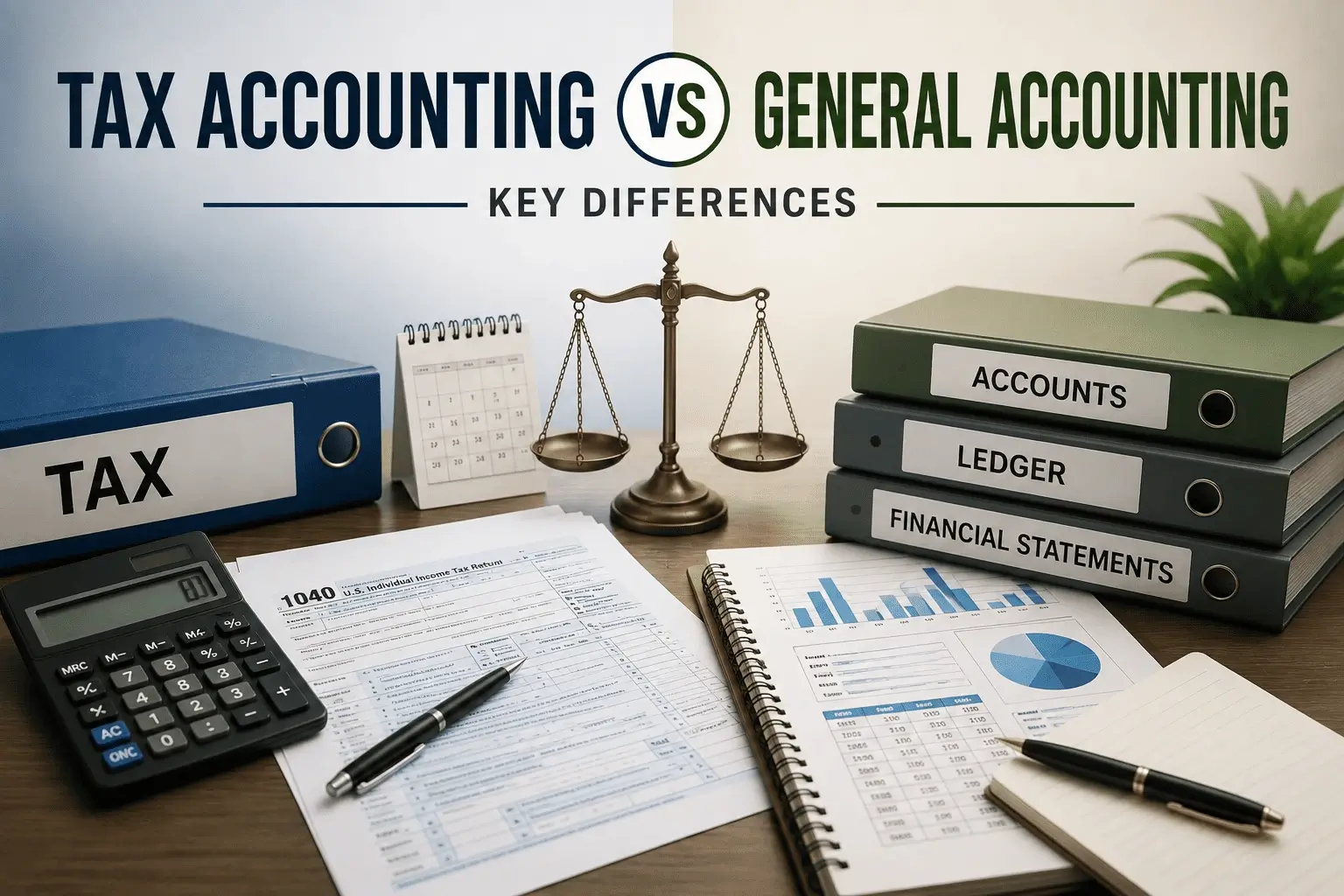
While there are many types of accounting, each serves a distinct purpose and plays an important role in a business’s financial health. Two commonly discussed types are tax accounting and general accounting. Both involve financial records and reporting, but they have different objectives and follow different processes.
Understanding the differences can help business owners stay current with requirements, make informed financial decisions, and manage their businesses more effectively.
Whether you are a new startup or a well-established company, it’s important to understand how tax accounting and general accounting work together to support long-term success.
What Is General Accounting?
General accounting involves tracking, categorizing, and summarizing an organization’s routine financial transactions. The primary goal is to provide an accurate picture of the business’s current financial position and performance.
Common responsibilities include bookkeeping, preparing financial statements, paying bills, receiving payments, tracking income, and reconciling accounts. Accurate general accounting enables owners to make informed decisions and maintain organized financial records throughout the year.
What Is Tax Accounting?
Tax accounting encompasses all aspects of taxation. This includes tax planning, tax compliance, and tax return preparation. It involves determining what a business owes under federal, state, and local tax laws and reporting it correctly. Tax accounting helps businesses and individuals comply with tax laws while using legal strategies to reduce taxable income where applicable.
Key Differences Between Tax Accounting and General Accounting
Although both involve financial information, their objectives and reporting requirements differ significantly.
| Factor |
Tax Accounting |
General Accounting |
| Primary Purpose |
Tax compliance and planning |
Financial reporting and business insights |
| Focus |
Tax laws and regulations |
Daily financial transactions |
| Reporting |
Tax returns and tax filings |
Financial statements and reports |
| Timeframe |
Tax periods and filing deadlines |
Ongoing financial management |
| Main Users |
Tax authorities and business owners |
Management, investors, and lenders |
Why Businesses Need Both
Many business owners think one type of accounting covers everything, but tax accounting and general accounting actually support each other.
General accounting helps businesses:
Tax accounting helps businesses:
When used together, they create a complete system for managing company finances.
When Should a Business Focus on Tax Accounting?
Tax accounting is especially important when companies face complex tax obligations, operate across multiple states, hire employees, or experience rapid growth. Effective tax planning helps businesses avoid unexpected issues and make smarter financial decisions throughout the year.
When Is General Accounting Most Important?
General accounting is important at every stage of a business. Clear financial records support decisions related to budgeting, loan applications, day-to-day operations, and future planning. Without reliable records, companies often struggle to evaluate performance or identify financial problems early.
Conclusion
Tax accounting and general accounting each play different but important roles. General accounting provides a clear view of a company’s financial position, while tax accounting supports compliance and effective tax planning. Businesses that use both are often better equipped to manage growth, reduce financial risks, and make informed decisions about future operations.
For assistance with bookkeeping, accounting, tax preparation, tax consulting, or compliance planning, KayaTax & Bookkeeping Services offers all-in-one tax, accounting, and business advisory services tailored to help businesses stay organized, compliant, and financially confident year-round.