One of the most challenging aspects of operating an online business in the United States is managing sales tax regulations. With constantly changing nexus rules, tax obligations across multiple states, marketplace requirements, and varying filing requirements by state, many e-commerce businesses struggle to keep up as they grow. Errors, inaccurate filings, or failure to register when required can result in penalties, audits, interest, and financial problems.
Online merchants, particularly those using platforms such as Shopify, Amazon, Etsy, Walmart Marketplace, and WooCommerce, sell products to customers across multiple states. This can make sales tax obligations related to registration, tax collection, reporting, exemptions, and filing deadlines very complex and confusing for many business owners.
Without a good system in place, online businesses might accidentally collect the wrong amount of tax, miss filing requirements in certain states, lose track of nexus thresholds, or misunderstand what they need to report through marketplaces.
If you are still working through your sales tax responsibilities, keep reading to review this sales tax compliance checklist for online sellers.
What Is Sales Tax Compliance?
Sales tax compliance involves registration, collection, reporting, filing, and payment of sales taxes in accordance with state and local laws. Online sellers must comply with various tax regulations based on customers’ locations and business activities that may create tax liabilities.
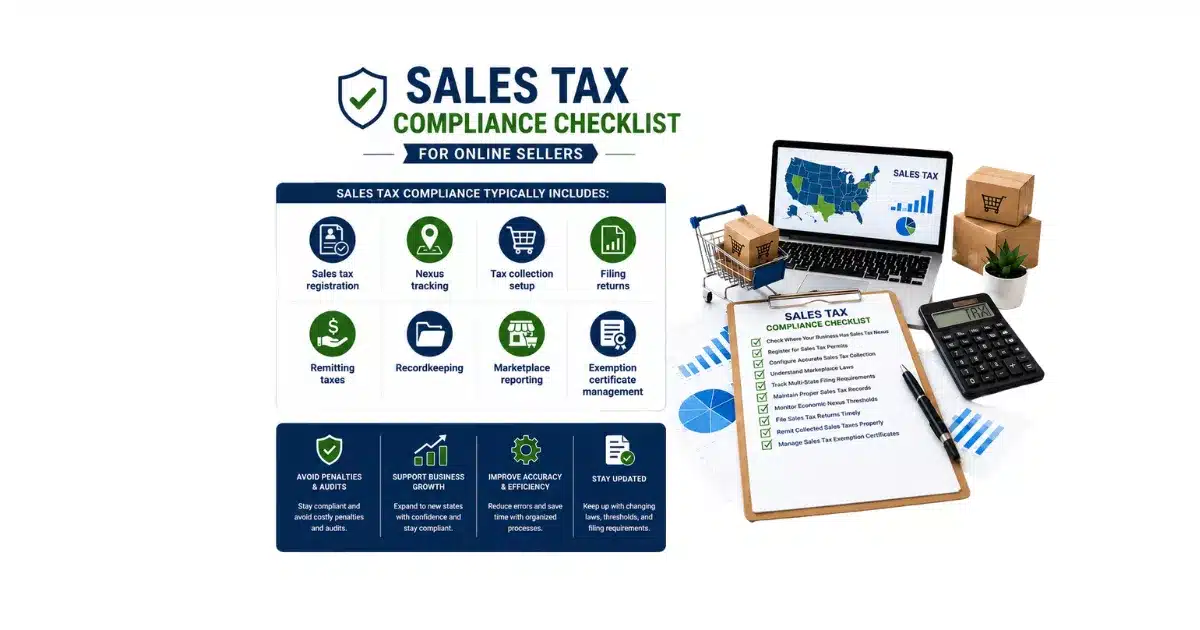
Sales tax compliance typically includes:
Good sales tax compliance helps businesses reduce the risk of penalties, audits, filing errors, and other reporting problems.
Importance of Sales Tax Compliance for Online Sellers
Sales tax compliance directly impacts financial accuracy, legal compliance, operational efficiency, and future growth for online businesses that sell across multiple states.
Helps Avoid State Penalties and Audits
Failure to collect and remit sales tax properly can result in penalties, interest, tax audits, and additional state tax bills.
Protects Business Financial Stability
Incorrect sales tax reporting can create unexpected financial problems that affect cash flow and long-term planning.
Supports Multi-State Ecommerce Growth
Solid compliance systems enable online sellers to expand into additional states while keeping their operations and sales tax management organized as the business grows.
Sales Tax Compliance Checklist for Online Sellers
Online sellers should rely on a clear checklist to minimize the risk of reporting errors and ensure sales tax is managed effectively across all business activities.
Check Where Your Business Has Sales Tax Nexus
Sales tax nexus is the connection between a state and your business that determines where companies must register, collect, and remit sales tax. Nexus can result from:
Many states now use economic nexus rules based on annual sales or the number of transactions.
Register for Sales Tax Permits
Companies need to register for sales tax permits before they begin collecting sales tax in states where registration is required. Collecting sales tax without proper registration can lead to compliance problems and potential penalties.
Registration requirements may vary based on the following:
Business structure
State regulations
Marketplace operations
Product categories
Nexus activities
Configure Accurate Sales Tax Collection
Online sellers must ensure their e-commerce systems apply the correct state, county, city, and local tax rates at checkout when applicable. Incorrect tax collection can cause reporting problems, customer issues, and additional financial liabilities later.
Sales tax collection systems should handle:
Understand Marketplace Facilitator Laws
Many online marketplaces now collect and remit sales taxes under marketplace facilitator laws. However, sellers may still have their own filing or reporting obligations depending on the state and their business activities.
Marketplace facilitator platforms may include:
Amazon
Shopify
Etsy
Walmart Marketplace
eBay
Understanding what the marketplace handles helps prevent duplicate filings and reporting errors.
Track Multi-State Filing Requirements
States have different filing schedules based on revenue and tax obligations. Filing frequencies may include:
Monthly filings
Quarterly filings
Annual filings
Missing deadlines can quickly result in penalties, interest, and state notices.
Maintain Proper Sales Tax Records
Good recordkeeping is important for audit protection and accurate financial reporting. Online sellers should maintain clear records to support every sales tax filing and collection.
Important records may include:
Sales invoices
Marketplace reports
Tax filings
Exemption certificates
Payment confirmations
Nexus documentation
Solid documentation helps companies respond more efficiently during audits or reviews.
Monitor Economic Nexus Thresholds Regularly
Economic nexus thresholds vary widely from state to state and can change over time. Businesses need to regularly review their revenue and transaction activity to identify new registration requirements before problems arise. Failing to monitor nexus thresholds can lead to unexpected back taxes and additional reporting obligations later.
File Sales Tax Returns Timely
Sales tax returns need to be filed accurately and on schedule according to state requirements. Even if there are no taxable sales, some states may still require a return to be filed.
Late filings may result in:
Penalties
Interest charges
Compliance notices
State audits
License suspension risks
Remit Collected Sales Taxes Properly
Businesses that collect sales tax generally hold those funds on behalf of state and local tax authorities. Collected sales tax should not be treated as ordinary business income. Properly tracking and remitting these funds helps maintain accurate financial records and supports ongoing compliance.
Manage Sales Tax Exemption Certificates
Companies that sell tax-exempt items or work with exempt organizations must maintain valid exemption certificates for applicable nontaxable sales.
Exemption management may involve:
Certificate collection
Expiration tracking
Verification processes
Audit documentation
Missing certificates can create additional tax liabilities during state audits.
Common Sales Tax Mistakes Online Sellers Make
Many e-commerce companies run into compliance issues because they make incorrect assumptions about online sales tax obligations and filing requirements across states.
Assuming Marketplace Platforms Handle Everything
Some sellers assume marketplaces handle all tax responsibilities in every state and for every business situation.
Failing to Register After Reaching Nexus
Businesses can exceed economic nexus thresholds without realizing that new registration, collection, or filing obligations may apply.
Collecting Incorrect Tax Rates
An incorrect sales tax setup can result in customers being charged too much or too little, creating reporting problems and potential compliance issues.
Missing Filing Deadlines
Late filings often result in penalties, interest, and compliance notices that can become more serious over time.
Poor Recordkeeping Practices
Disorganized records can create significant problems during audits and tax reviews across multiple states.
Important States Online Sellers Should Monitor Closely
Online sellers operating across multiple states should pay close attention to states with detailed economic nexus, marketplace, and remote seller requirements.
California
California uses detailed district tax rules along with statewide collection requirements for sellers who operate remotely.
Texas
Texas applies economic nexus thresholds and requirements for remote sellers involved in both marketplace and direct online sales.
New York
New York closely monitors online seller compliance involving marketplace activity, economic nexus, and remote sales reporting requirements.
Florida
Florida economic nexus rules apply to remote sellers that exceed the annual revenue threshold for taxable online sales.
Benefits of Professional Sales Tax Compliance Support
Professional tax support can help e-commerce businesses reduce compliance risks and manage multi-state sales tax responsibilities more efficiently.
Improves Filing Accuracy
Professional review can help reduce filing errors, incorrect tax calculations, and reporting discrepancies that may create compliance problems.
Helps Businesses Stay Updated on Changing Laws
Sales tax requirements can change over time and vary significantly by state. Professional guidance can help businesses stay informed about new or updated requirements.
Reduces Audit and Penalty Risks
Organized compliance systems can help reduce financial risks associated with audits, penalties, and missed filings.
Simplifies Multi-State Tax Management
Professional tax support enables online sellers to manage registrations, filings, nexus reviews, and reporting more efficiently.
Conclusion
Sales tax compliance has become one of the most challenging operational issues for today’s e-commerce businesses. Online sellers need to stay on top of nexus laws, marketplace rules, filing deadlines, exemptions, and reporting requirements across multiple states as they scale their businesses.
Even minor filing mistakes or missed obligations can lead to penalties, audits, back taxes, interest, and additional financial pressure that may affect the business over the long term.
Sales tax compliance can be easier with Kaya Tax & Bookkeeping Services’ customized tax planning, bookkeeping support, nexus tracking, multi-state filing support, and financial setup for online sellers. Our experienced tax professionals help companies reduce compliance risks, improve reporting accuracy, and manage their finances more smoothly and confidently.
Contact Kaya Tax & Bookkeeping Services today to simplify your e-commerce sales tax compliance and support the long-term growth of your online business.